
"This AI thing better work."
The biggest bet in history runs through data centers. A bottom-up tour of the ten cracks, how they domino, and the tape holding it together.

Easy money: buy dirt for $51M → sell to hyperscaler for $700M
A 60-second tour through a data center
AI players and their recent performance
What stops this train: 10 potential pitfalls
Scenarios: Jevons wins, orderly slowdown, “ouch”, and “oh sh*t”
What’s holding the system together
Our observations and predictions
Torsten Slok, Apollo’s chief economist, was recently asked what keeps him up at night. His response: “This AI thing better work.”
The entire world is making the biggest bet in history on AI’s potential. Our survey of 727 real estate professionals on how they use AI concluded with long-term gain and short-term disappointment.
Easy Money?
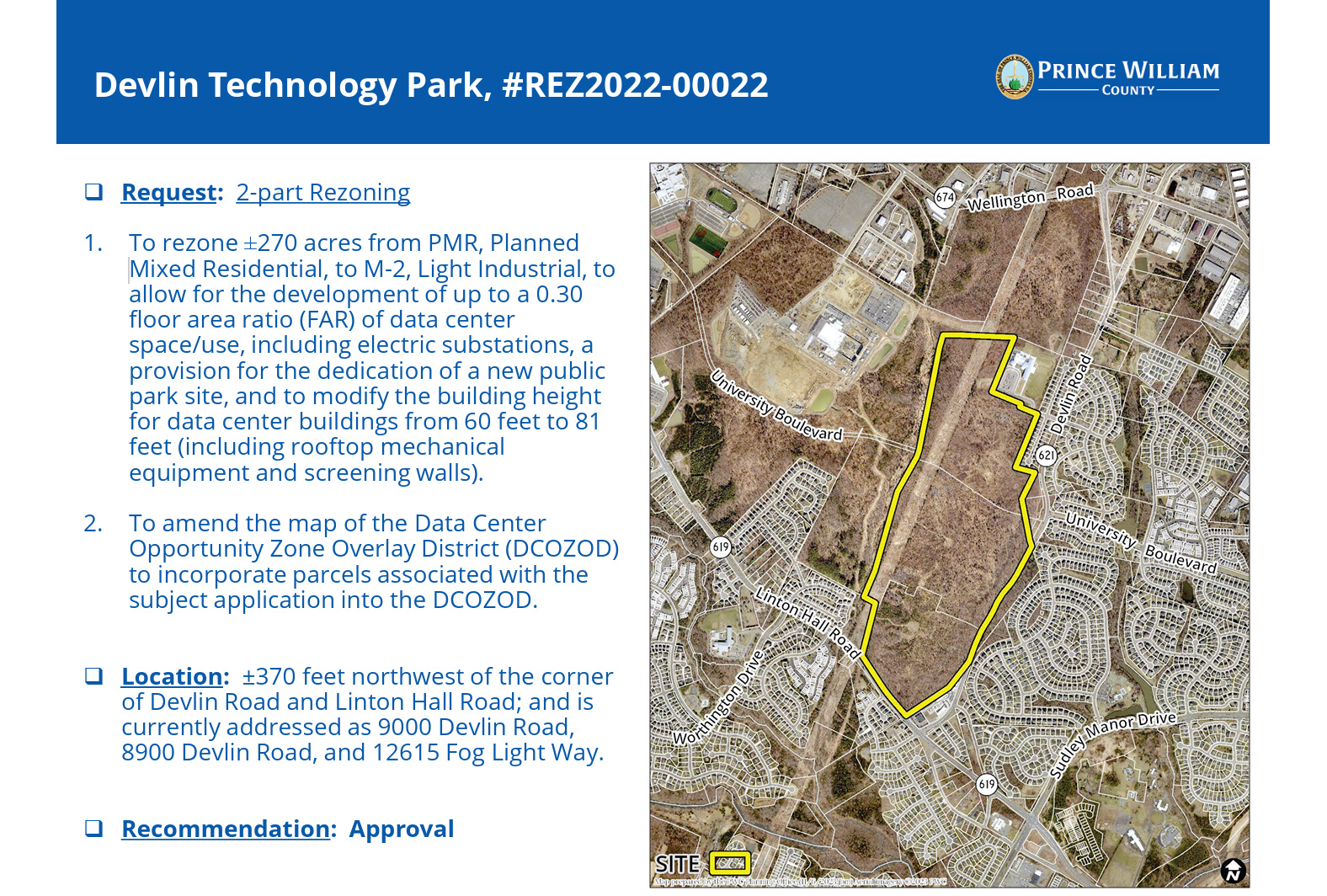
Six years ago, a homebuilder1 aggregated 189 undeveloped acres in Northern Virginia for $51 million. Instead of pursuing traditional housing zoning, the builder upzoned the site for data centers, then sold it to Amazon for $700 million.
$51 million → $700 million in three years without swinging a hammer.
Over the last 50 years, commercial real estate generated 8-9% average returns, mostly from clipping coupons. You can get stronger returns by taking more risk with transitional properties and development, but getting more than 15% IRR and 2x multiples has proven to be impossible to sustain; you just can’t consistently manufacture crazy returns in a slow-moving, capital-intensive sector.
…unless you’ve been sitting on data center land.
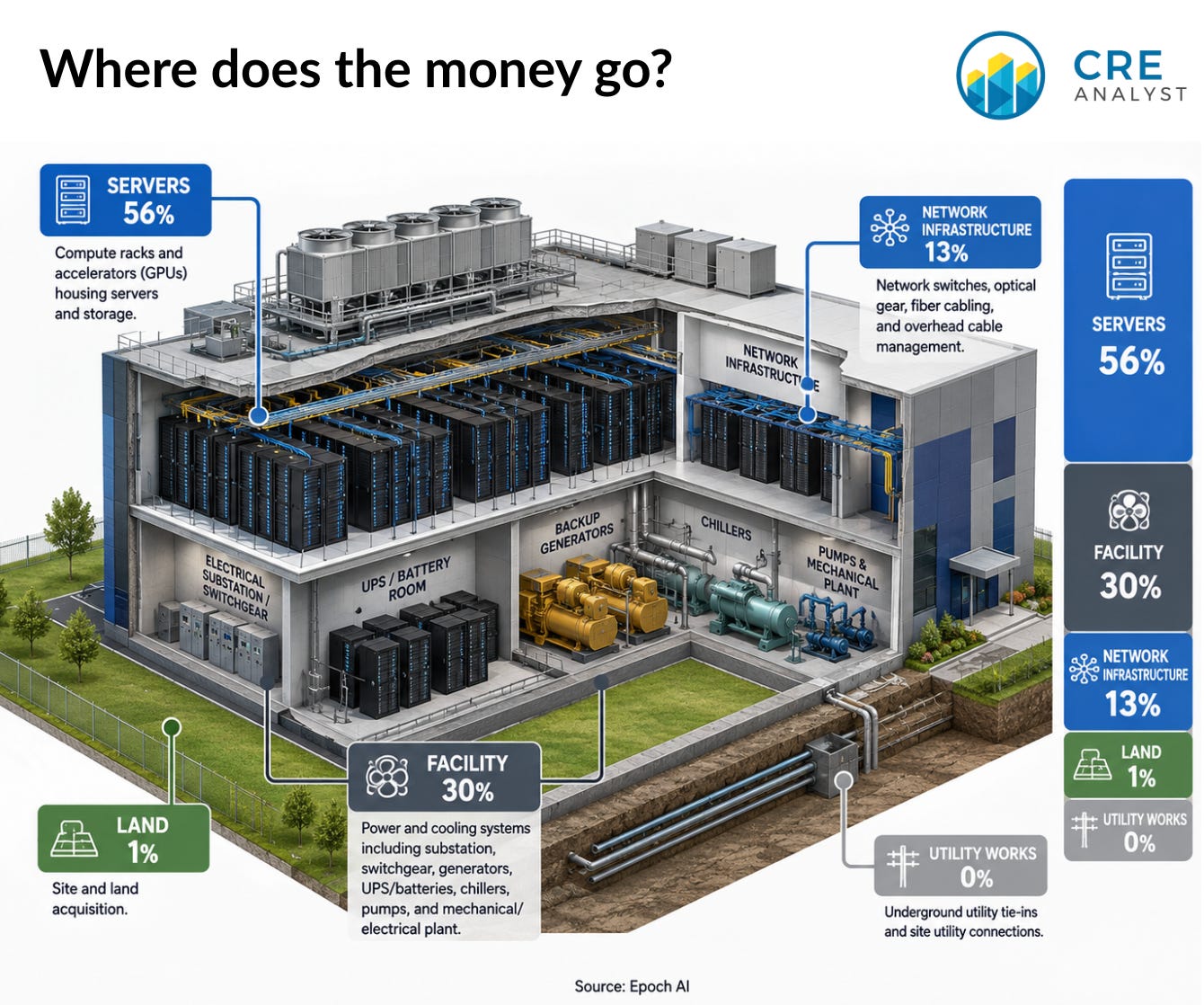
The data-center-land lottery example above (and others like it) led us to a key question: How can these data center developers pay so much for land?
Simple answer: “Because land makes up a small portion of the total cost.”
Fine, but that isn’t the root cause. So we kept digging. The real answer has a lot to do with the guts of a data center.
This article dissects the AI data center, tracks the parts back to their owners and financiers, shines a light on the cracks in the ecosystem that could cripple the global economy, and frames the tape that holds the cracks together.
The AI ecosystem in 60 seconds
The biggest financial bet in history depends on what happens in this windowless box:
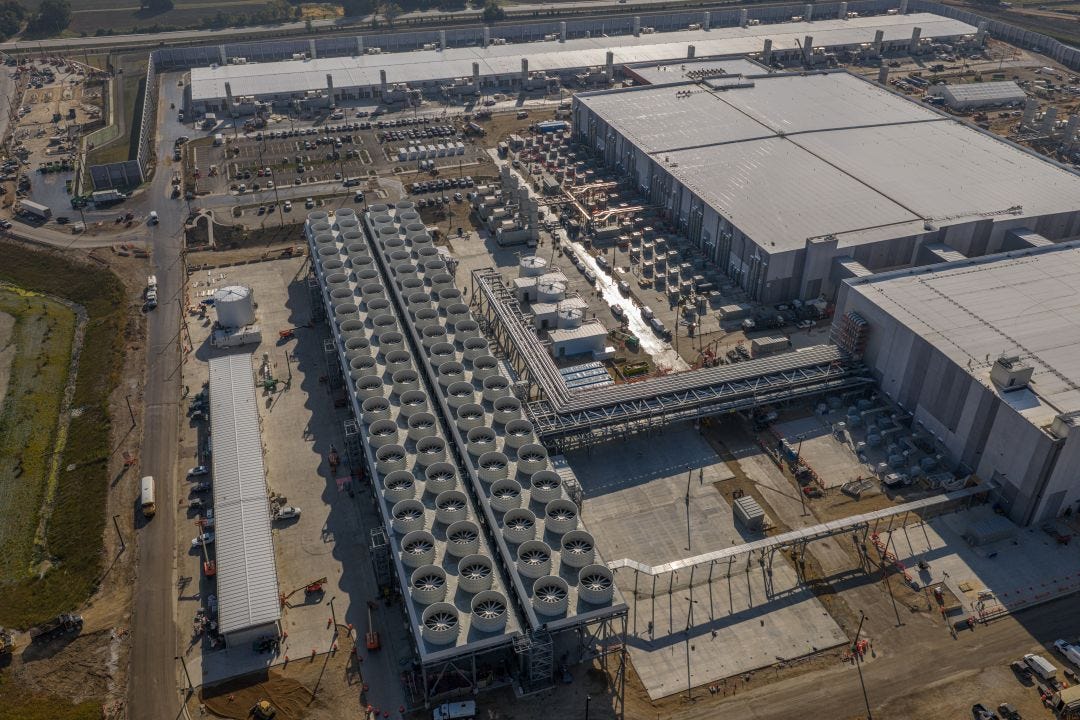
The AI world revolves around chips. Here’s an NVIDIA chip:
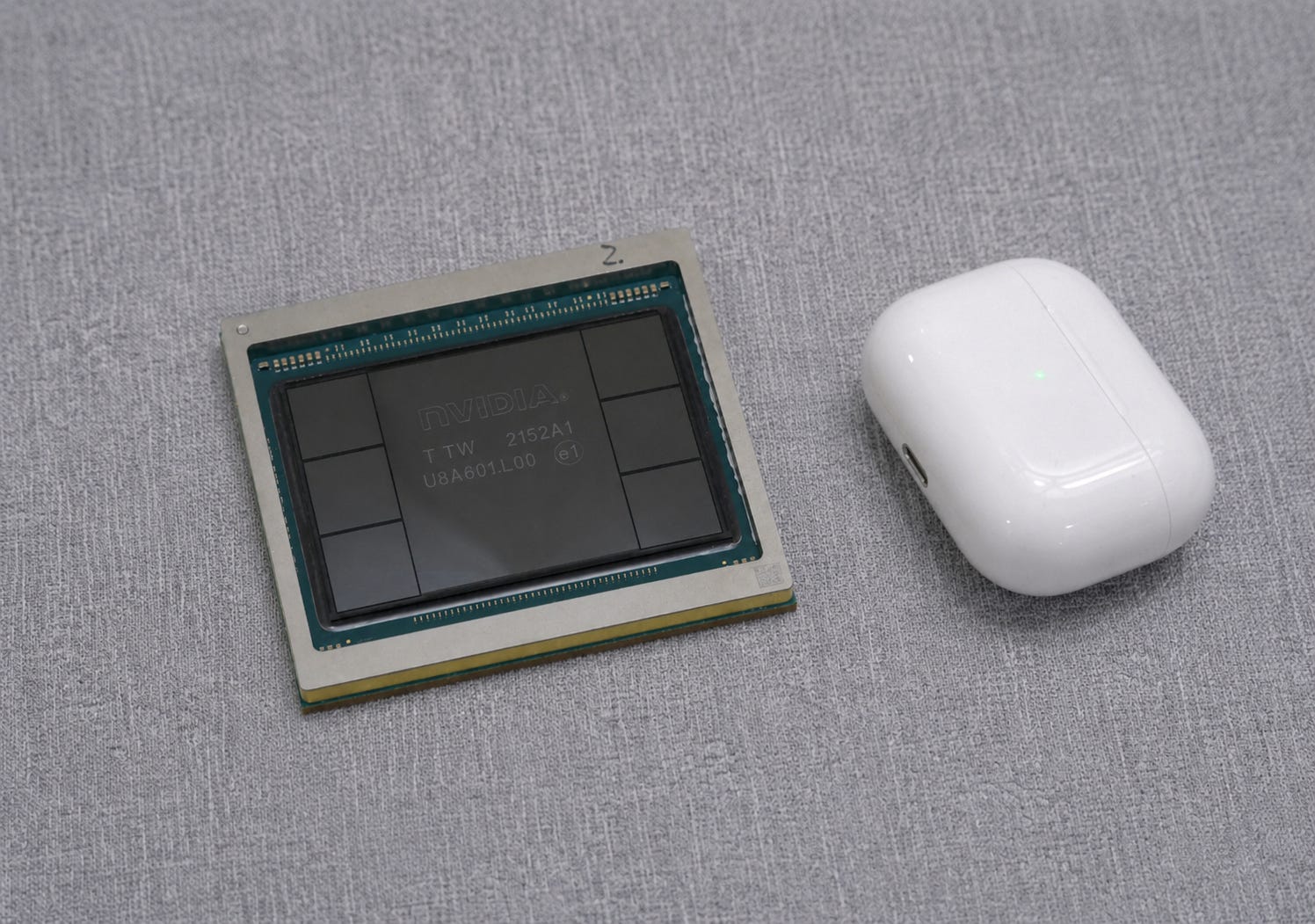
AI chips sit within GPU modules like this:
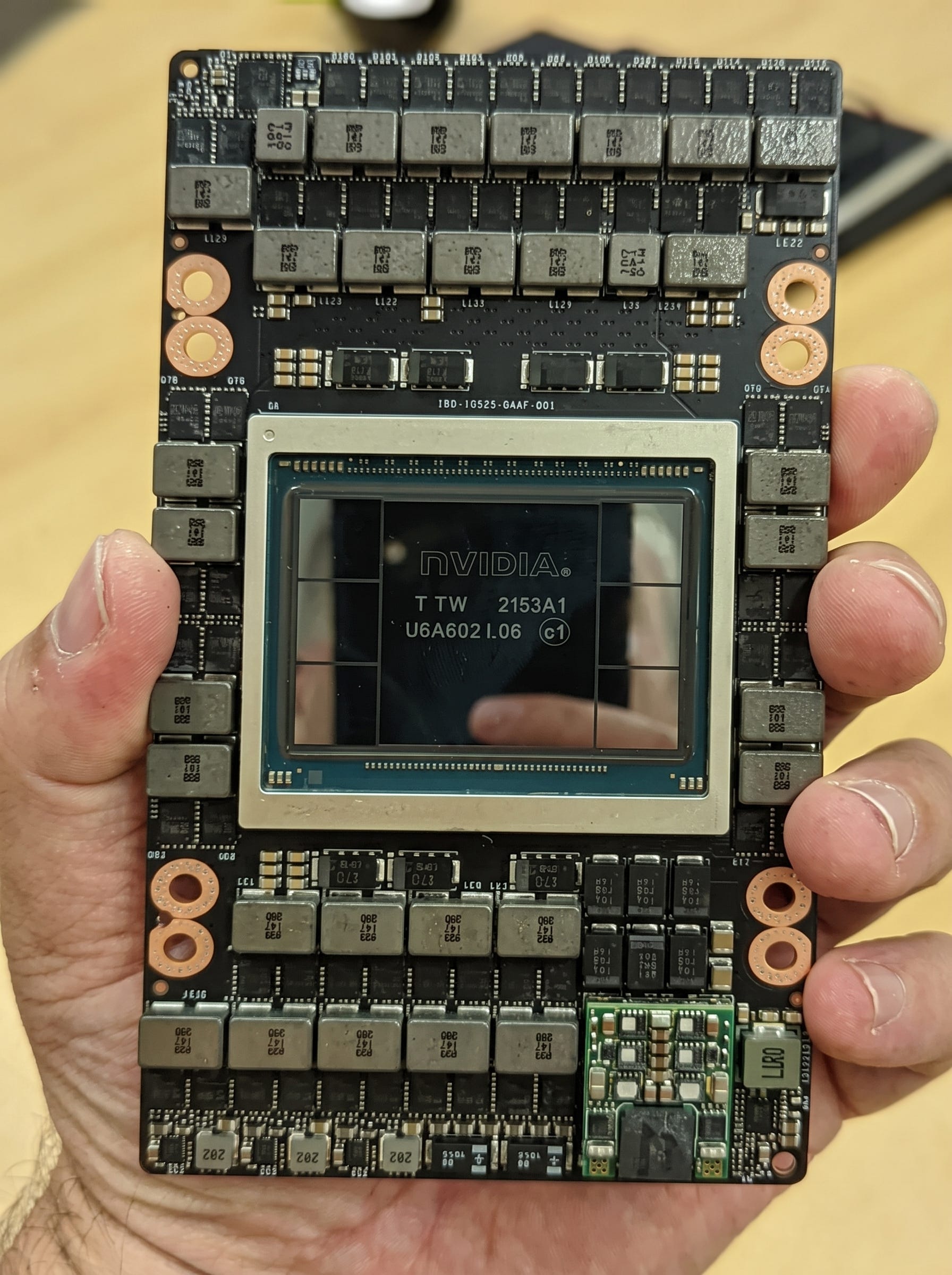
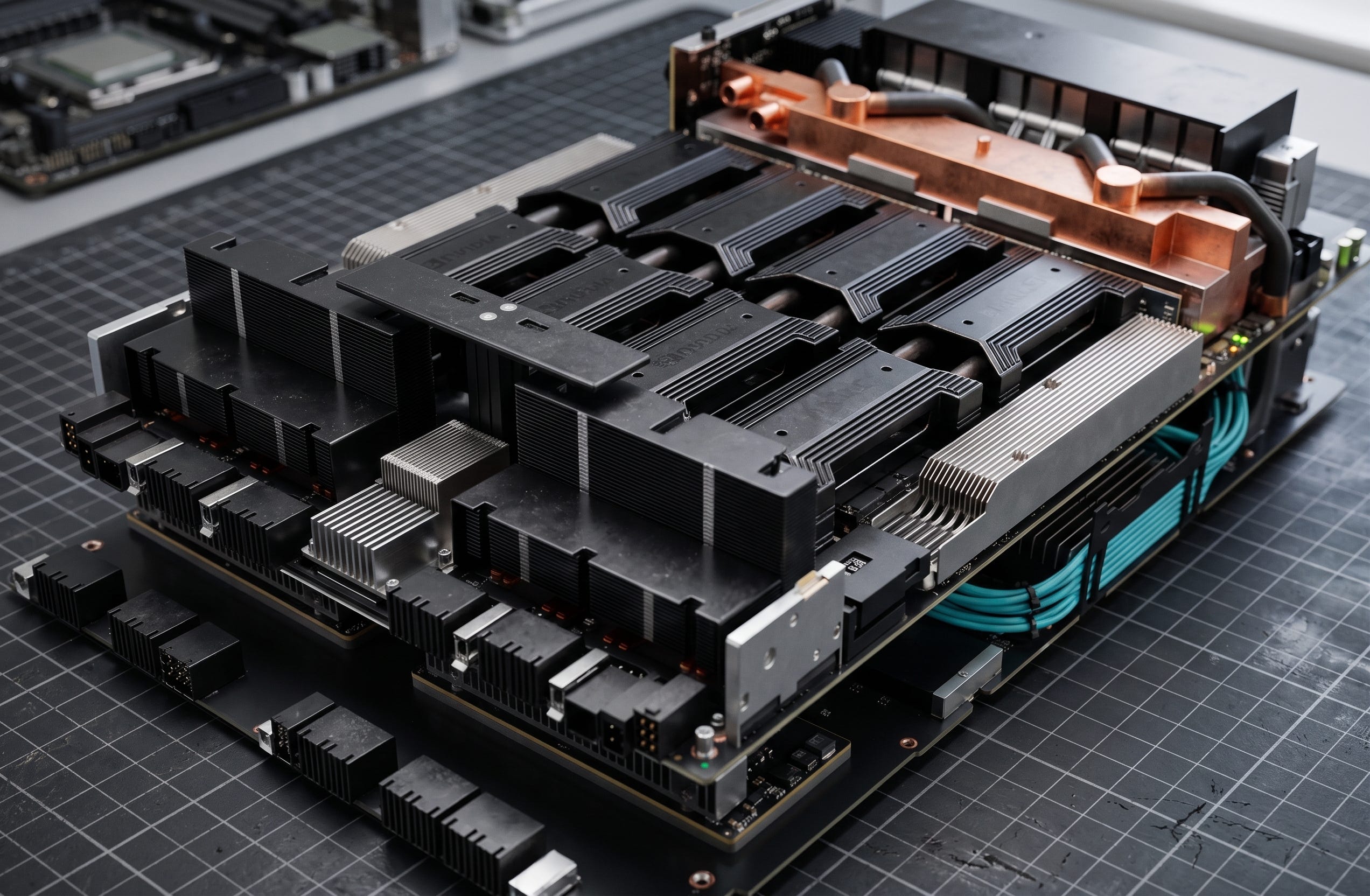
Here’s an example of how eight GPU modules are boxed into a server:
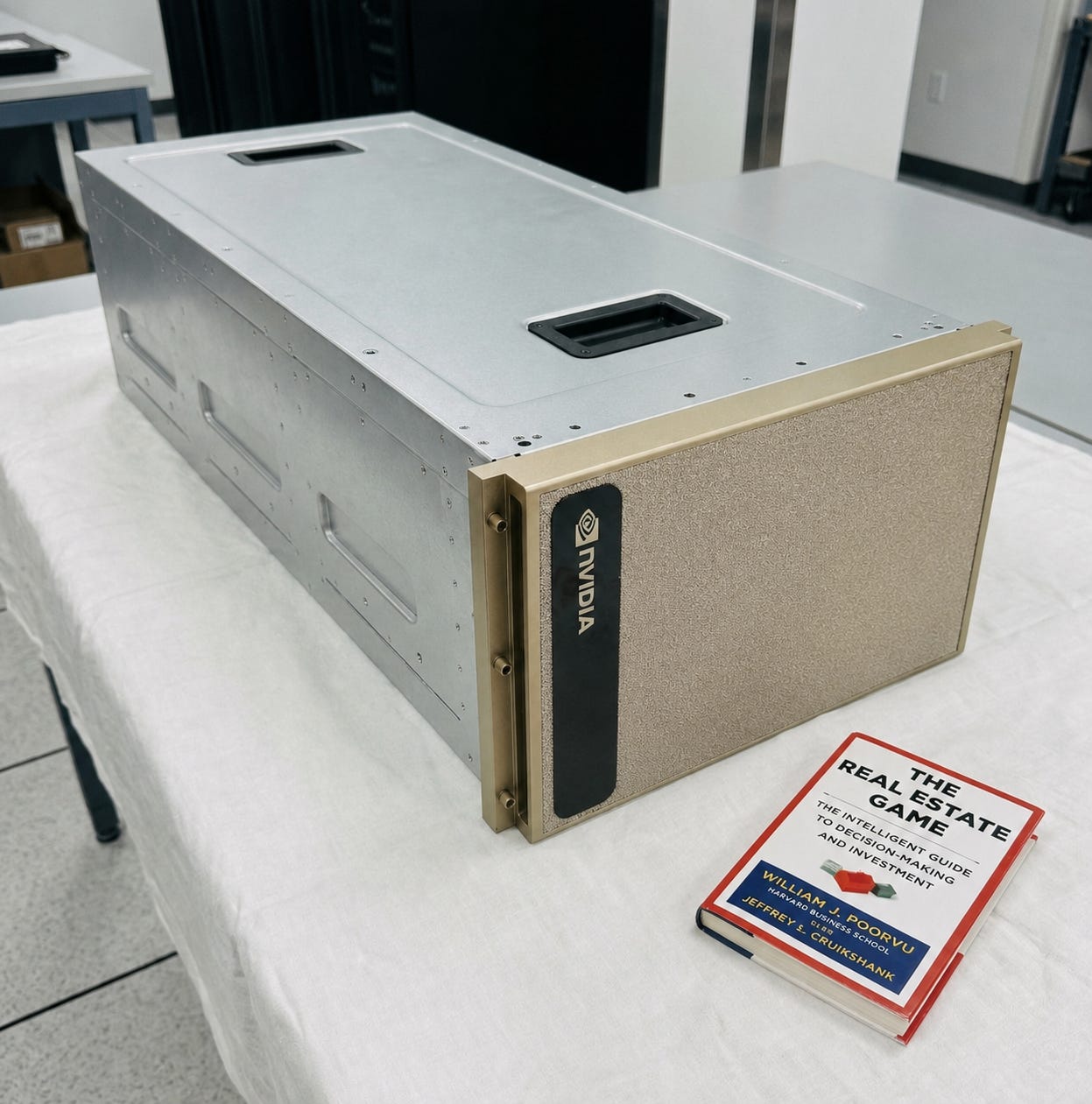
The server is protected in a ~300-pound box.
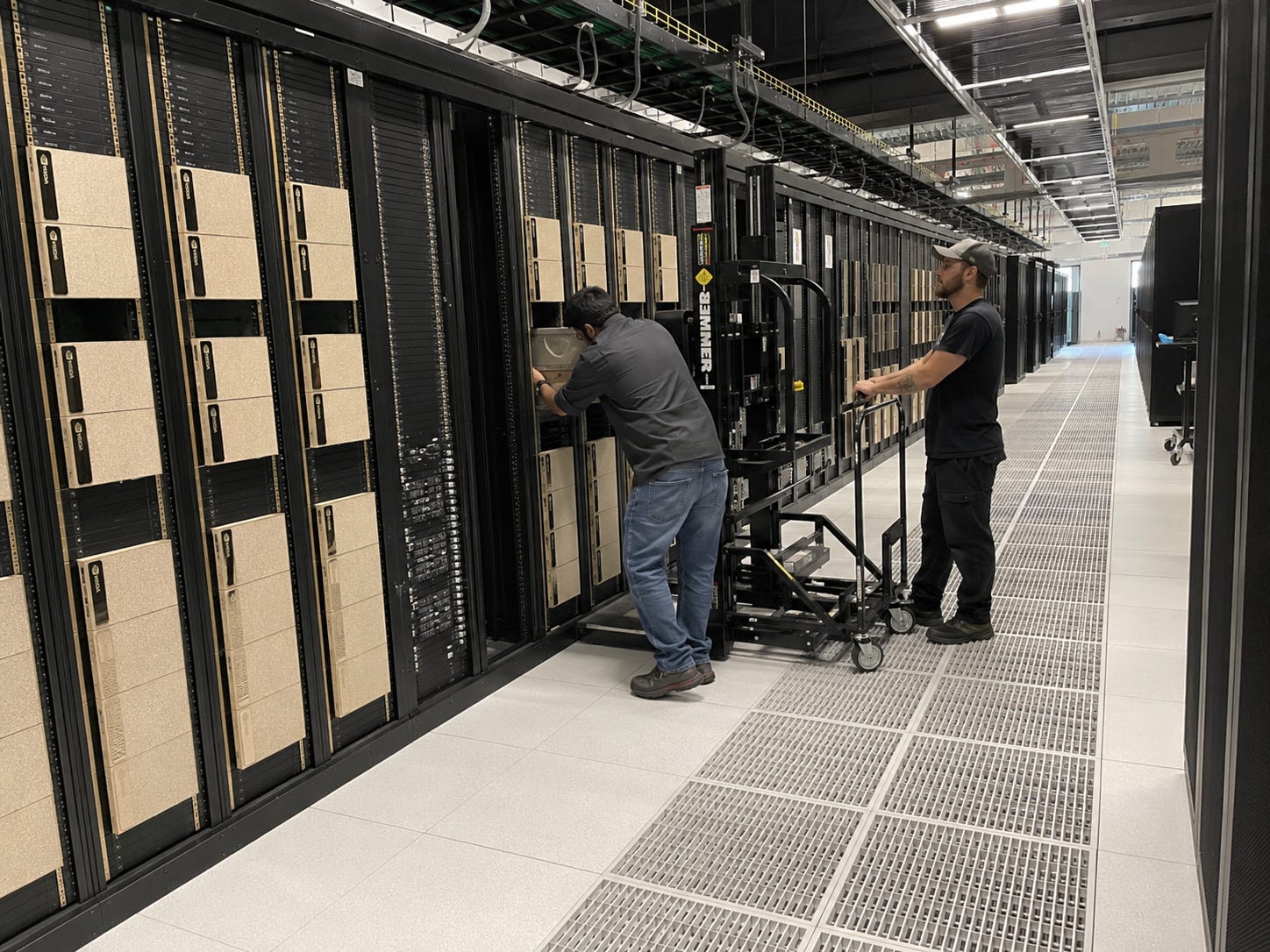
AI data centers house thousands of racks that hold servers and data storage:
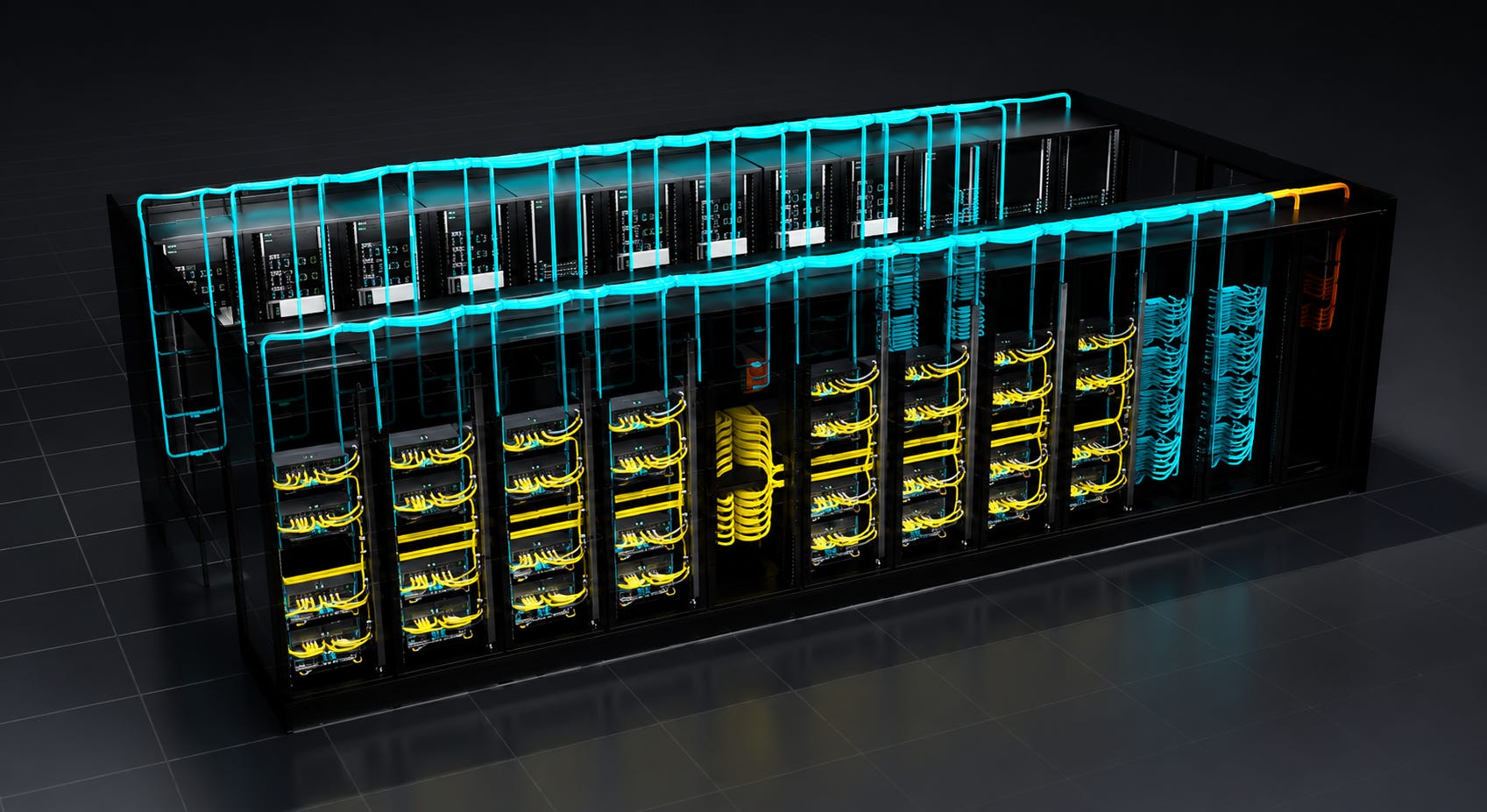
Networks move data between GPUs, racks, and pods with very low latency.
Data centers consume massive amounts of electricity. For example, the Abilene, Texas campus at the center of OpenAI's Stargate project sits on a site about the size of NYC's Central Park and, at full build, will draw around 1.2 gigawatts. That's enough electricity to power roughly a million homes, nearly every household in a city the size of Chicago.
Substations are like exit ramps for electricity flowing through the grid, and AI data centers depend on them.
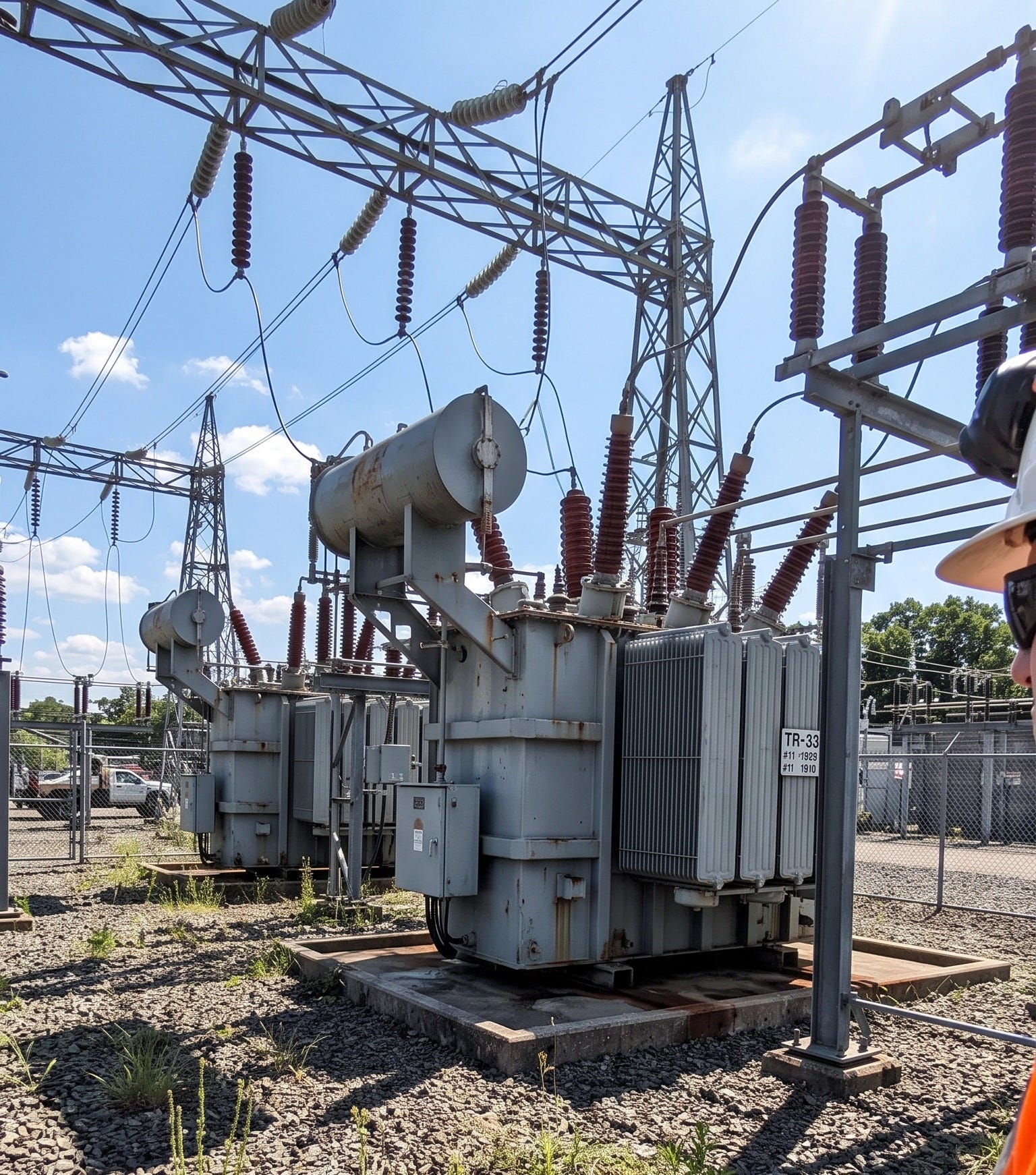
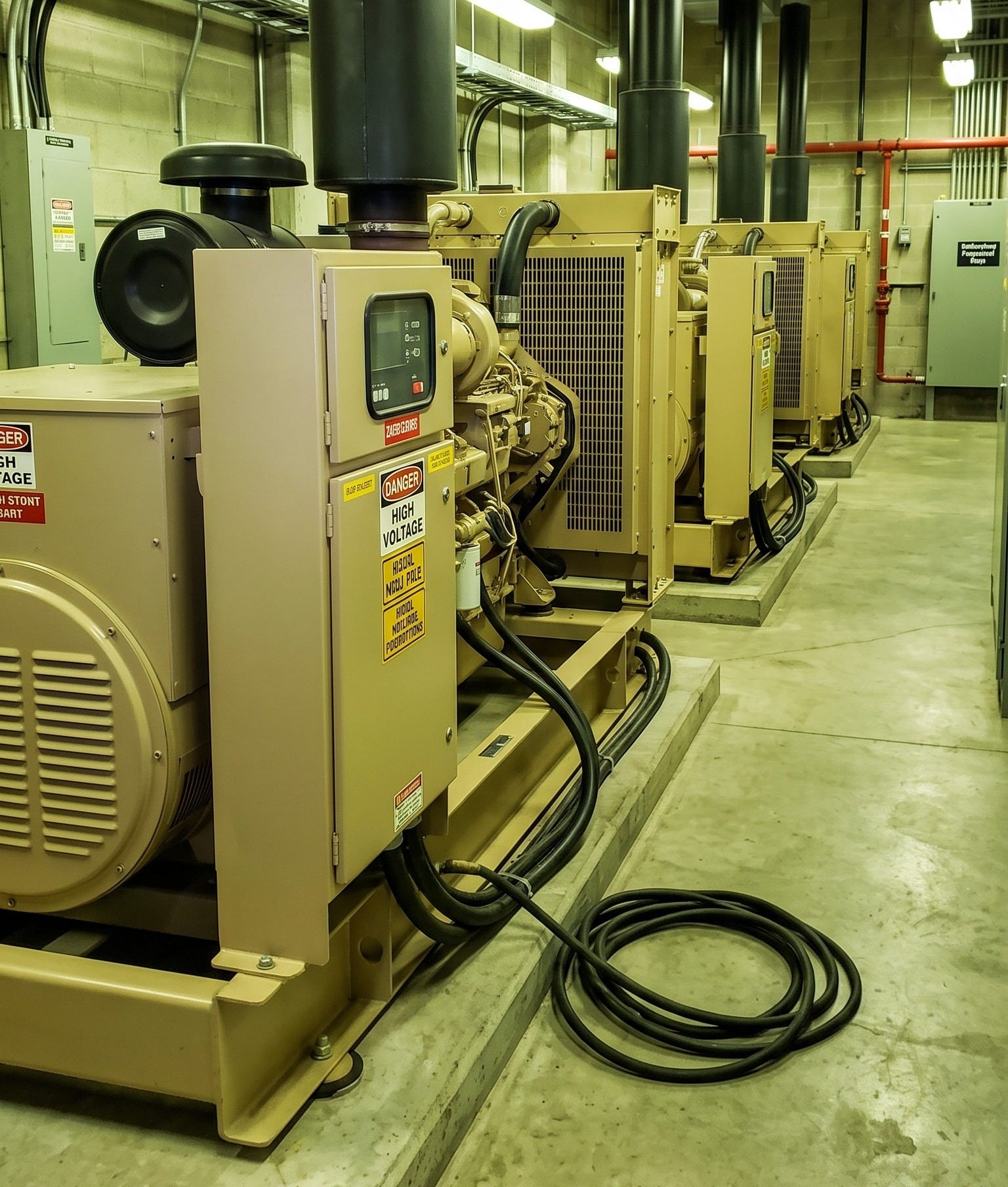
Outages are more than a hassle for data centers, so they build in redundancy. Generators are staged to kick in when power fails:
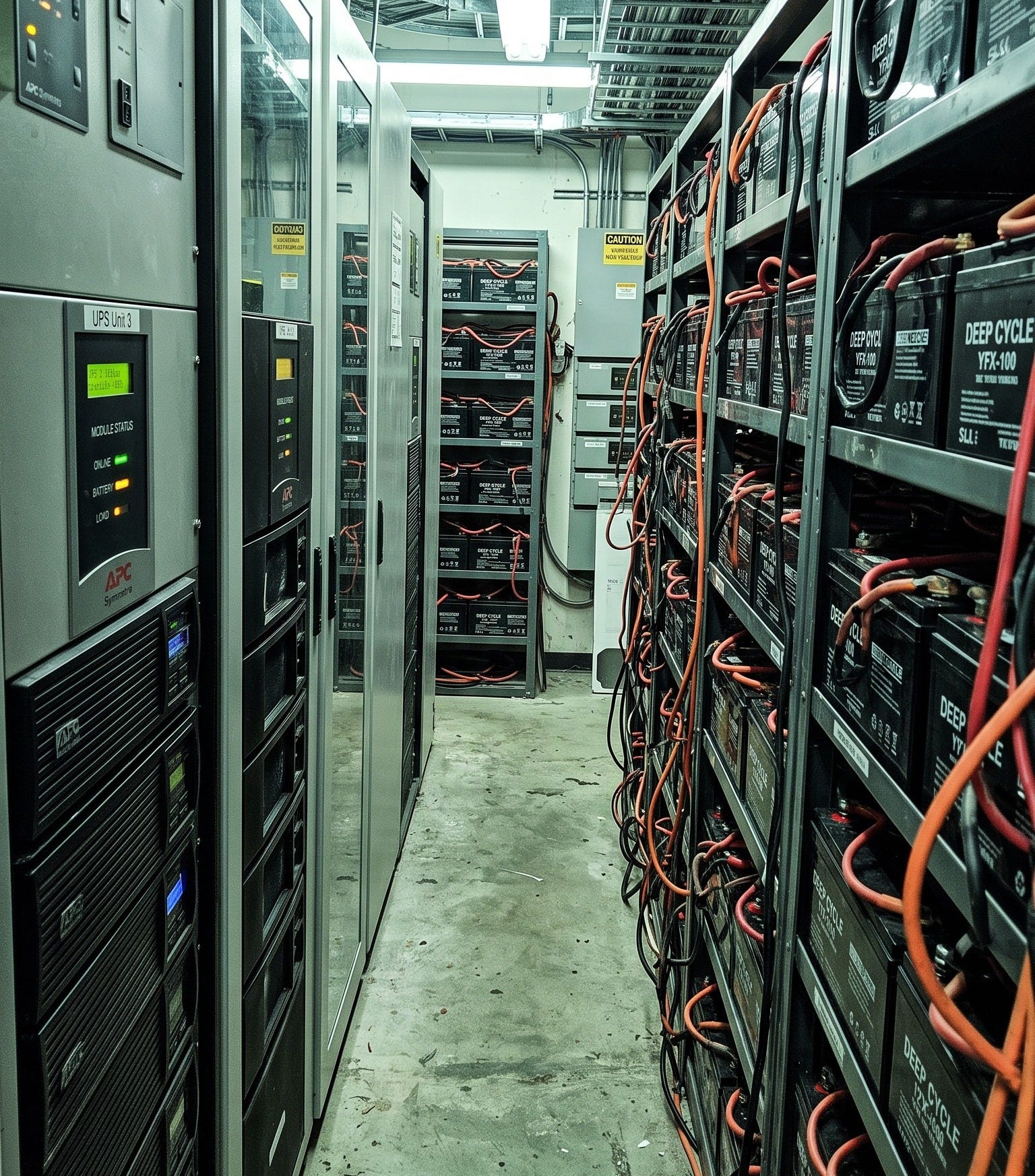
Since generators don’t fire up instantly, data centers need a bridge during power inconsistencies. Enter “uninterruptible power supply” (batteries) and power distribution units:
All of the above generate massive amounts of heat, which has to be managed with intense cooling systems:
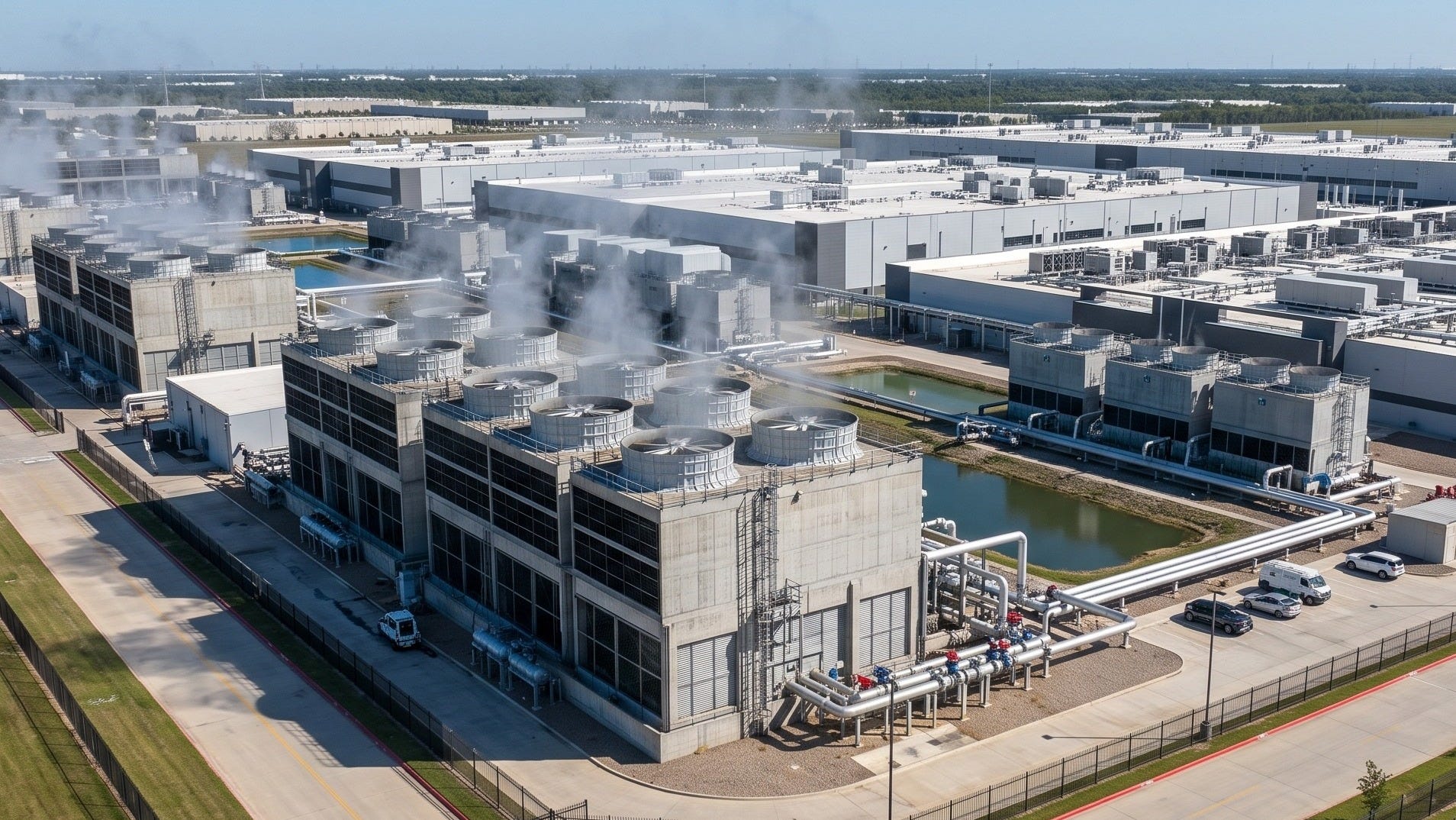
In a closed-loop liquid cooling system, cooling towers, chillers, pumps, and filters work together to bring cooling water into the building’s components, run hot water out, then recycle cold water back in.
Analogy
To simplify all of this, if the AI data center were a human body, it would look something like this:
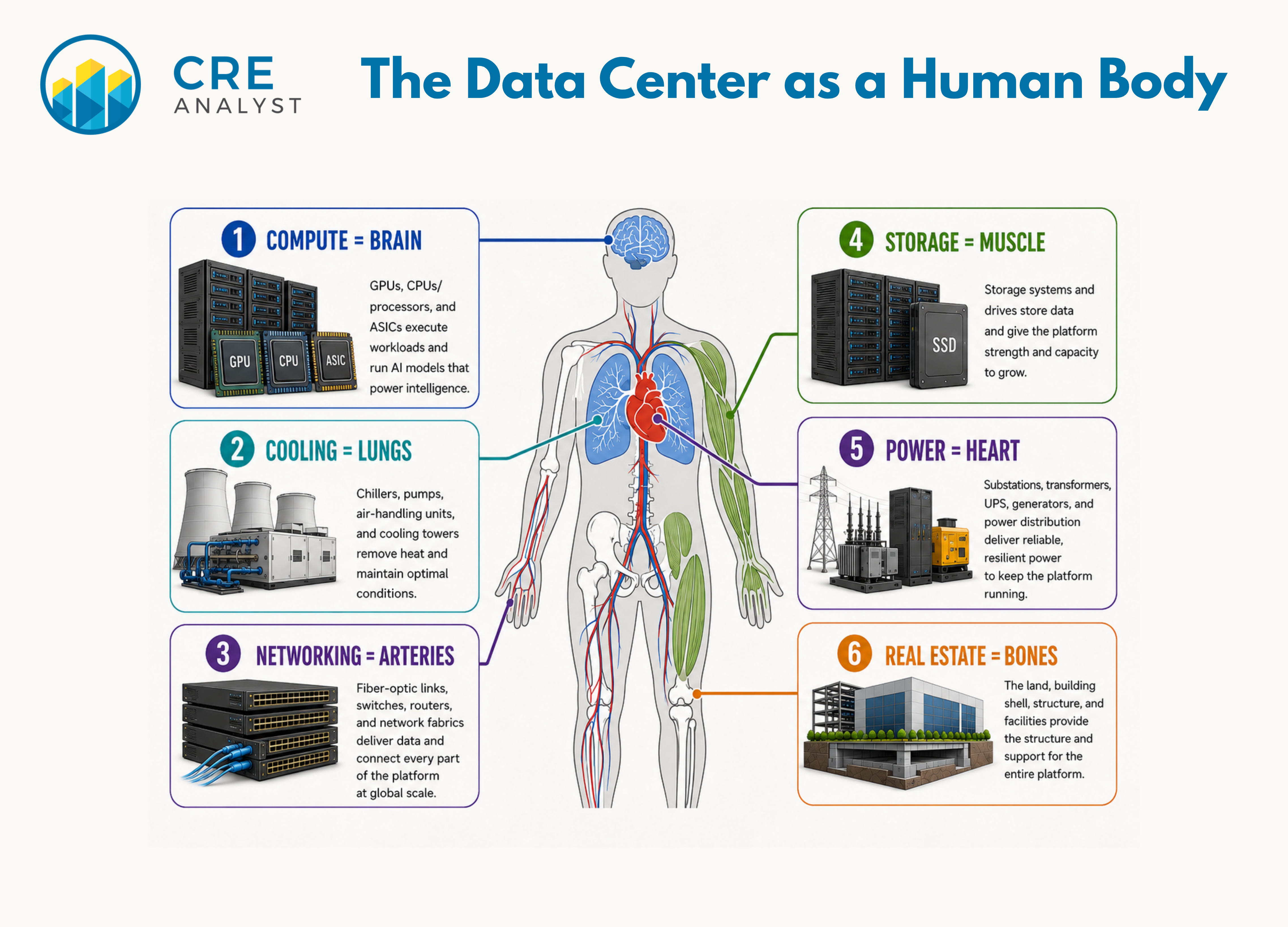
The AI Players
Here’s an outline of some of the biggest players, bucketed by their segment(s) of the AI ecosystem. To say that this list is both extensive and extremely atypical feels like an understatement. We are living through a generational explosion.

If your business feeds into the ecosystem outlined above, you’ve probably had a pretty good run the last few years. What could go wrong?
10 potential pitfalls
1. The buildout is enormous and accelerating
Humans are really bad at perceiving scale.
When thinking about millions, billions, and trillions, we tend to mentally categorize them as “big, bigger, biggest,” but…
A million seconds is 12 days.
A billion seconds is 32 years.
A trillion seconds is more than 30 thousand years.
We can’t help but compress, but our mental shortcuts don’t make the numbers any closer together in reality.
Three years ago, big tech invested about $150 billion a year in their property and equipment (“cap ex”). They’re spending $600 billion a year now and are on pace to hit a trillion a year in 2027.
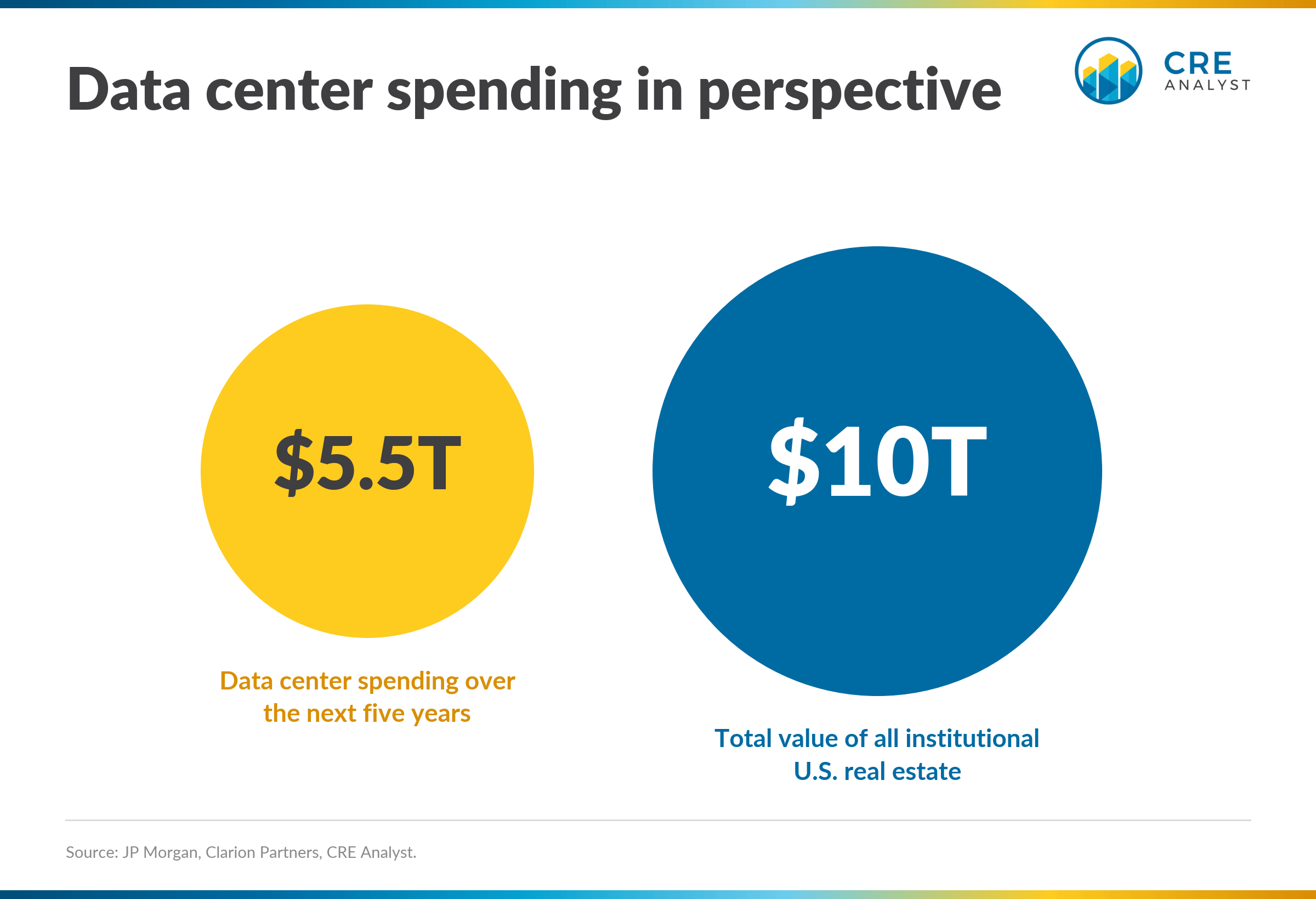
All in, the AI buildout is expected to cost about $5.5 trillion through 2030.
It’s easy to think “biggest” when you read $5.5 trillion, but the entire institutional real estate universe totals about $10 trillion.
The data center boom isn’t just big, bigger, or biggest. It is almost incomprehensible.
2. Debt
Pre-July 2026 model: Hyperscalers print cash, fund the data center buildout with cash flow, and don’t carry much debt.
Post-July 2026: Hyperscalers still print cash but don’t have enough cash flow to fund the increasing costs of their AI dreams, so they borrow trillions.
Given how quickly debt can turn disappointment into crisis, it would be easy to underestimate the risks related to this shift.
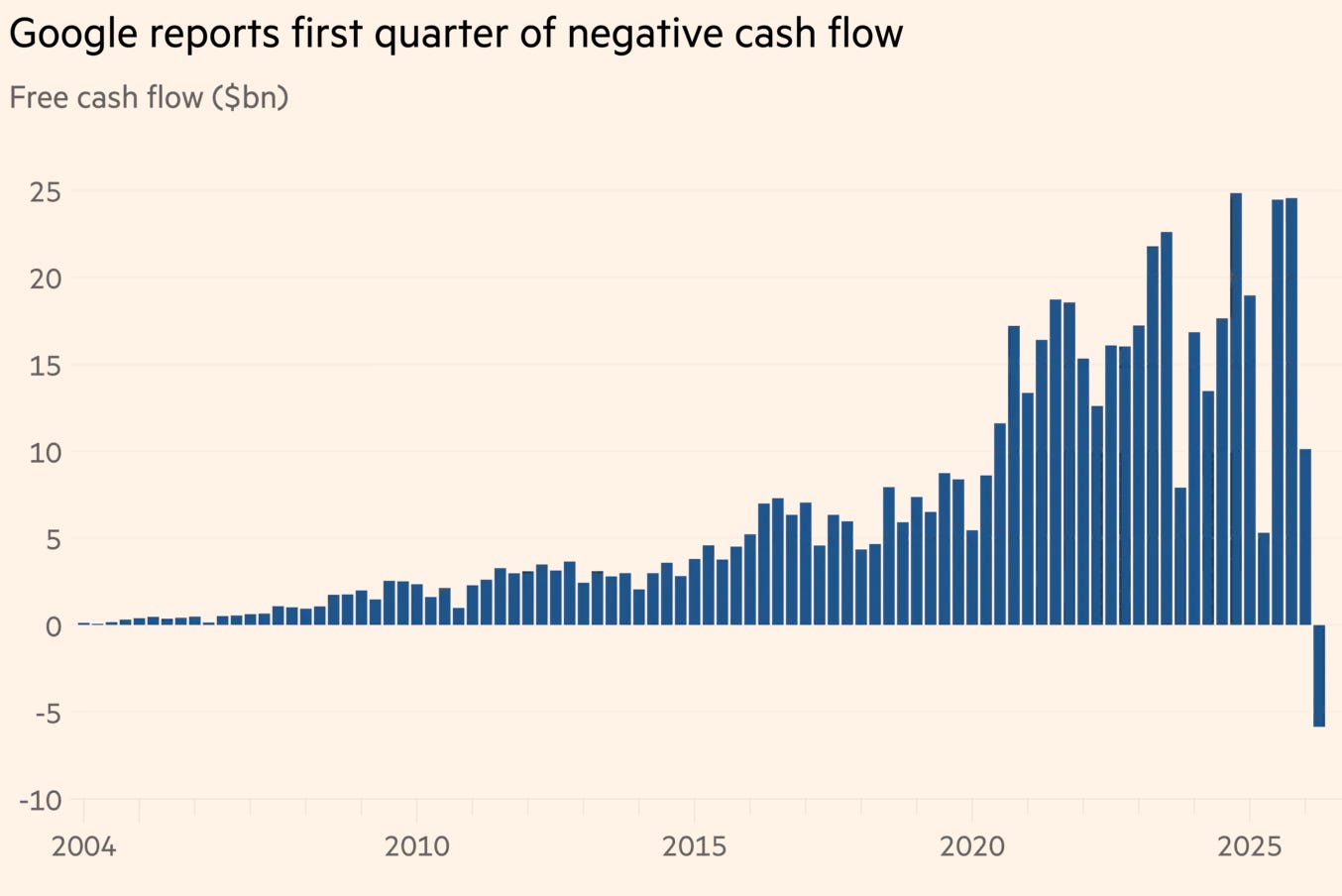
Until last quarter, Google, Microsoft, Amazon, and Facebook/Meta funded their AI dreams out of cash flow, but that just shifted. Google just reported its first quarter of negative cash flow in its 22-year history as a public company.
What do you do when faced with a big expense and don’t have cash to cover it? You borrow.
JP Morgan estimates the data center buildout will cost $5.5 trillion through 2030. With hyperscalers borrowing 75% of those costs, $4 trillion of new debt will enter the system in the coming years, but from where?
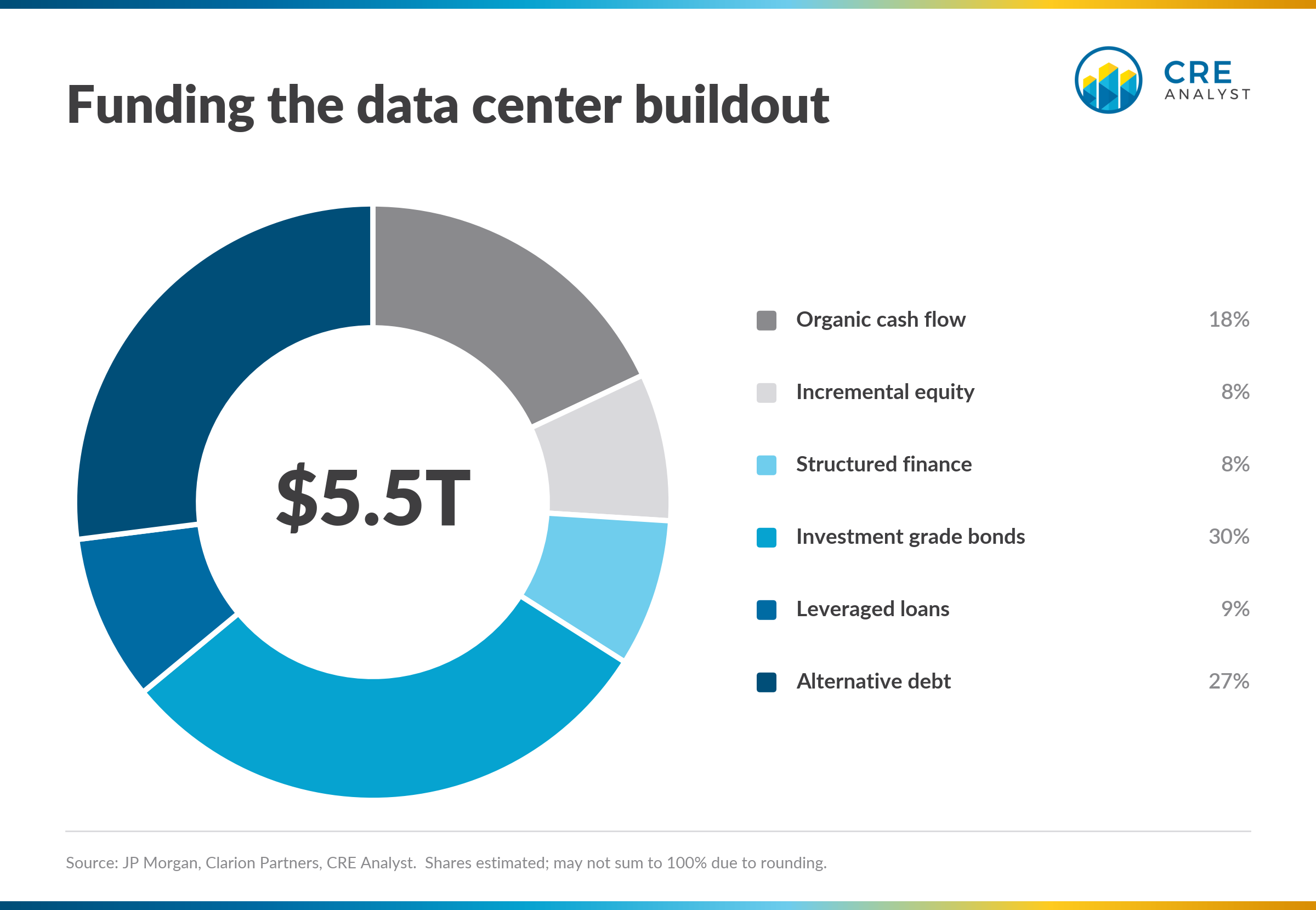
Traditional corporate bonds are the star of the data center debt show.
Microsoft and Google may not be able to print money like the U.S. Government, but their bonds are trading within 50-75 bps of Treasuries. Meta currently trades a bit wider with a ~110 bps spread over Treasuries.
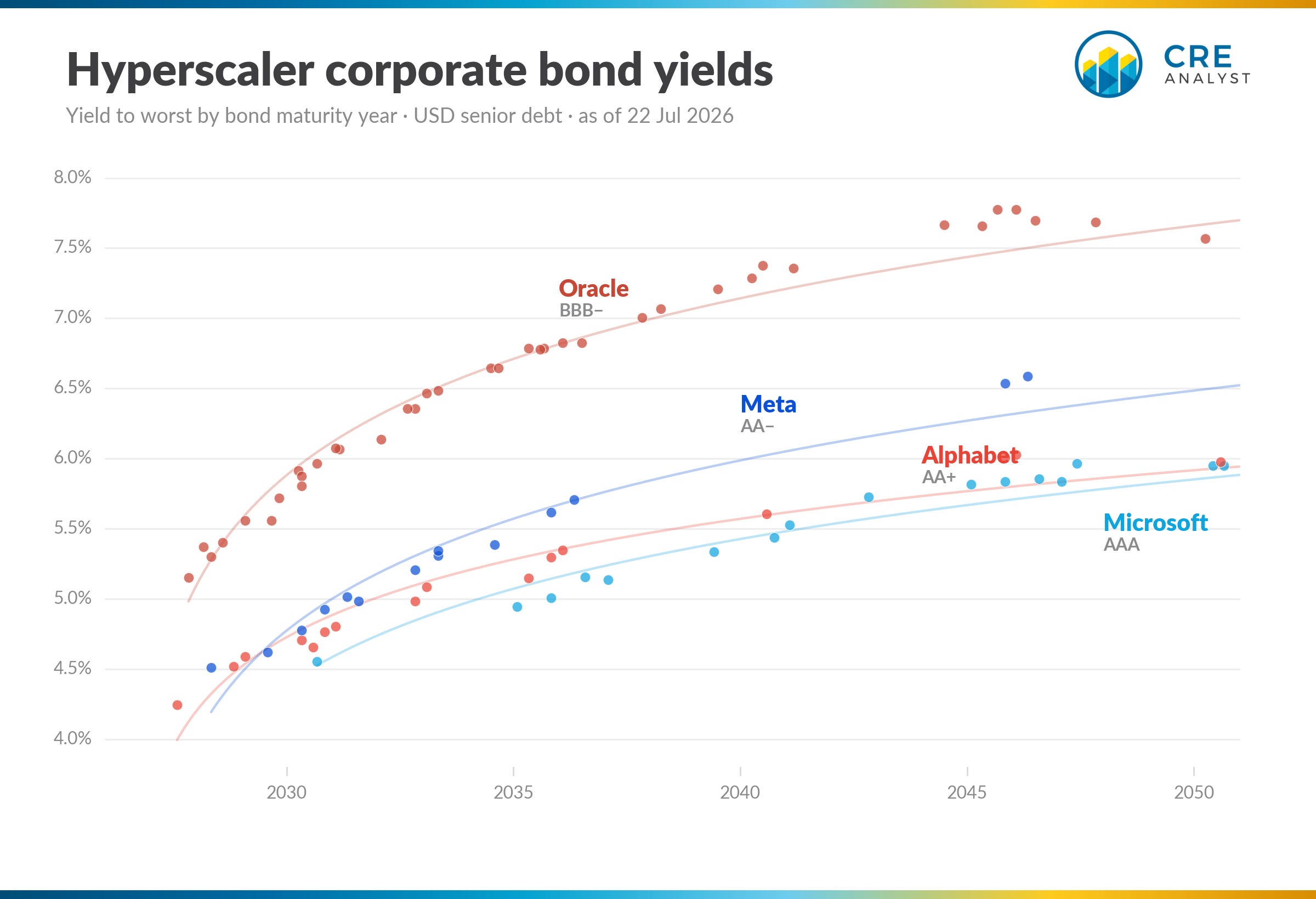
There’s a catch with corporate bonds though. The only thing backing repayment is the obligor’s unsecured promise, and those promises are substantially impaired when they borrow a lot. In short, these firms get cheap debt because they don’t use much of it, or at least they haven’t historically.
Oracle is a good example of this because the firm has been much more aggressive in its corporate debt-fueled AI expansion, resulting in a downgrade to the last level of “investment grade” (BBB-). Consequently, Oracle’s bonds are trading around 7% vs. the others in the mid 5s.
But it turns out that not all lenders need unqualified repayment promises that tie directly to the corporate hyperscalers. They find creditworthiness and opportunity in additional security.
Enter alternative debt. You could call this “private credit,” but we want to be careful with terms here because this extends well beyond loans to non-public operating companies.
Private credit data center financing typically takes the form of commercial mortgages and equipment debt, where lenders (usually investment managers sponsoring debt funds or insurance companies) look to the specific tenancy and asset quality to assess repayment risk. These types of loans are on track to cover about $1.5 trillion of the data center build-out in the coming years.
Debt funding sources fall off meaningfully after corporates and private credit, but securitization has been ramping up in recent years. The CMBS and ABS markets have embraced data centers with about $11 billion of originations YTD, but $20 billion a year is a drop in the $5.5 trillion bucket.
Altogether, hyperscalers are borrowing 75% of development costs to complete these projects. There’s no doubt that one of the world’s largest, most credit-worthy companies borrowing 75% LTC debt to finance big projects is unlike traditional construction projects. But real estate types can’t help but bristle at the sound of 75% LTC construction financing. We’ve seen that game before, and it didn’t end well. The last time 75% LTV financing was prevalent in commercial real estate, default rates reached 30%.
Five hyperscalers also carry about $1.65 trillion of off-balance sheet debt that doesn’t show up in their financials. Some pundits call it “hidden” and reach for Enron and CDO comparisons. Regulators, rating agencies, and investors know the debt is there. Debt doesn’t have to be nefarious or hidden to be dangerous.
3. Mismatched liabilities
Data center construction has largely been financed with debt that matures 10 or 15-years after construction. If those buildings last 40 to 50 years, what’s the problem?
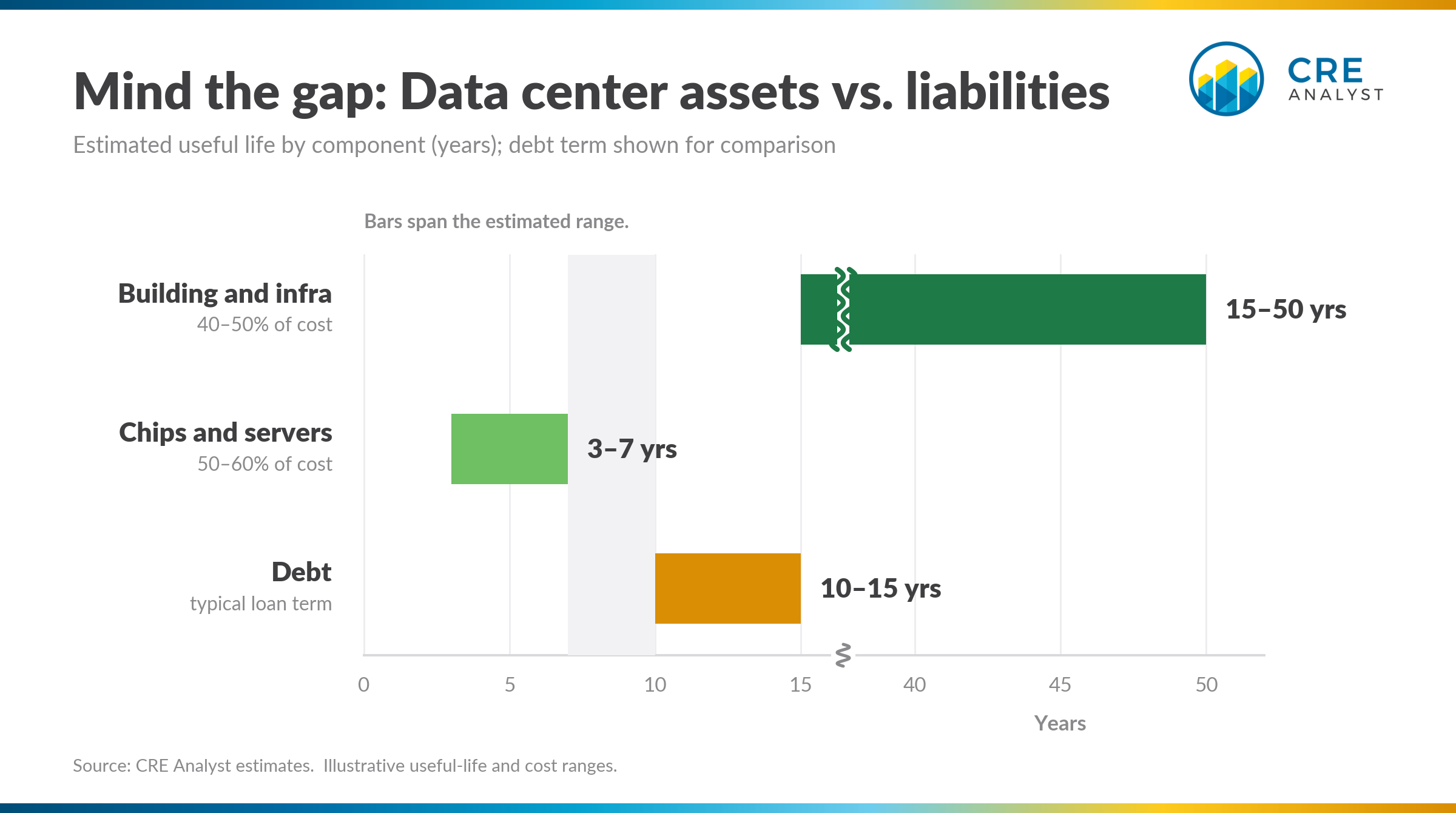
Those long-dated bets are all based on estimated values that depend on the engine of a data center: chips. And the value of those chips falls substantially after 3 to 7 years. The earnings engine wears out long before the debt matures, and that potential mismatch lands at refinancing.
Are we financing a car with a 15-year loan?
4. A shallow takeout market
Who actually owns these buildings for the long run?
